
Choosing the right welding wire is crucial for achieving strong, clean, and efficient welds. Two of the most commonly used welding wires in steel fabrication are Solid Wire (ER70S series) and Flux Cored Wire (E71T series). While both are widely used, they differ significantly in structure, performance, and applications.
This article will explain the differences between solid wire and flux cored wire, their typical applications, and tips for selecting the right wire for your projects.
What is Solid Wire?
Solid Wire is a solid steel wire that requires external shielding gas (such as CO₂ or Argon/CO₂ mixtures) to protect the weld pool from oxidation.
Key Features:
- Structure: Solid copper-coated steel wire
- Shielding: Requires external gas
- Weld Appearance: Smooth, clean, minimal spatter
- Ease of Use: Beginner-friendly
- Efficiency: Medium deposition rate, ideal for thin to medium steel
Typical Applications:
- Indoor fabrication projects
- Automotive and machinery manufacturing
- Furniture and sheet metal welding
- Precision welding where clean appearance is required
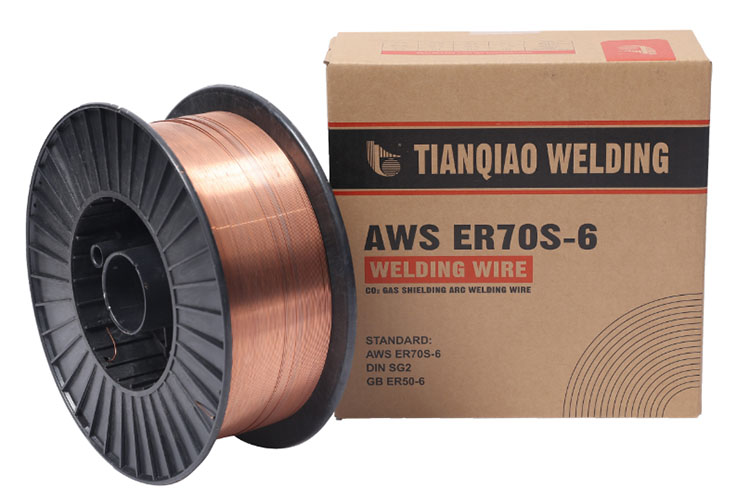
Example: ER70S-6 is a widely used solid wire known for its clean welds and easy handling.
What is Flux Cored Wire?
Flux Cored Wire is a tubular welding wire filled with flux. The flux generates shielding gas during welding, protecting the weld pool from oxidation. Flux cored wires can be self-shielded (no external gas required) or gas-shielded (requires CO₂ or mixed gas).
Key Features:
- Structure: Tubular wire with flux inside
- Shielding: Self-shielded or requires gas
- Weld Appearance: Slag-covered, requires cleaning
- Ease of Use: Moderate, requires some welding experience
- Efficiency: High deposition rate, deep penetration
Typical Applications:
- Outdoor construction and welding
- Shipbuilding and structural steel projects
- Thick steel plates or heavy-duty welding
- Projects in windy or harsh conditions
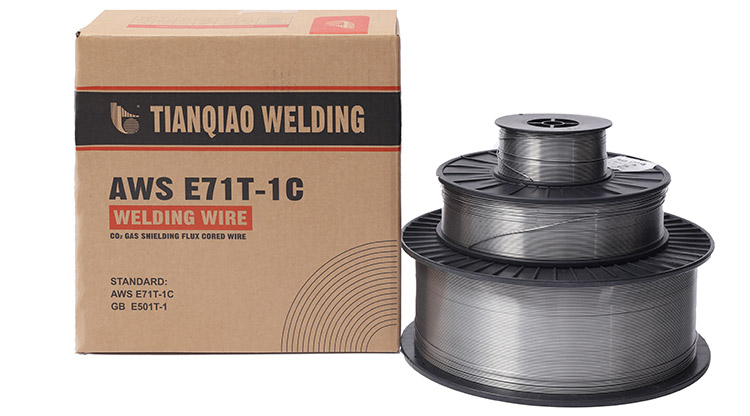
Example: E71T-1C is a popular flux cored wire for structural welding, offering high efficiency and strong penetration even outdoors.
Solid Wire vs Flux Cored Wire: Key Differences
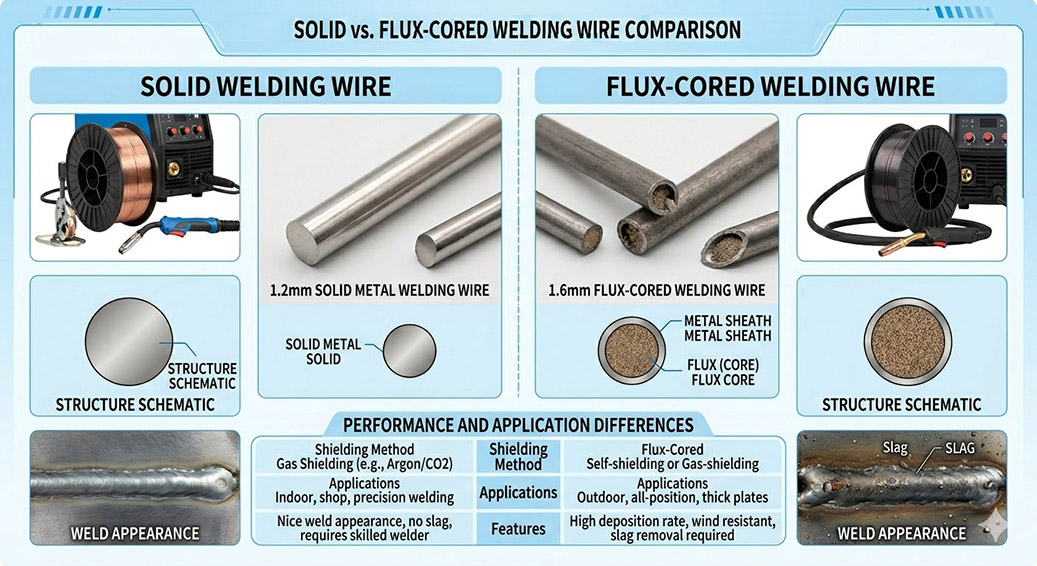
| Feature | Solid Wire (ER70S-6) | Flux Cored Wire (E71T-1C) |
| Wire Type | Solid | Tubular with flux core |
| Shielding Gas | External gas required | Self-shielded or gas-shielded |
| Outdoor Performance | Poor, affected by wind | Excellent, suitable for outdoor |
| Weld Appearance | Clean and smooth | Slag-covered, needs cleaning |
| Penetration | Medium | Deep, ideal for thick steel |
| Efficiency | Medium | High deposition rate |
| Skill Level | Easy, beginner-friendly | Moderate, requires experience |
How to Choose the Right Wire
Choose Solid Wire if:
- Welding indoors or in a controlled environment
- Working with thin to medium steel
- Clean weld appearance is a priority
- Beginners are performing the welding
Choose Flux Cored Wire if:
- Welding outdoors or in windy conditions
- Working with thick steel or heavy structures
- Efficiency and penetration are more important than appearance
- Skilled operators are available
Post time: Apr-15-2026