
In multi-pass and multi-layer welding, temperature control between each bead and layer is crucial. This is the “interpass temperature” under discussion. Interpass temperature refers to the maximum or minimum temperature to which the previous layer or bead can reach before the next layer or bead starts welding during the multi-pass, multi-layer welding process.
The correct choice of interpass temperature directly affects the microstructure, mechanical properties and defect formation of welded joints. If the interpass temperature is improperly selected, the following problems may result:
It is easy to cause welding cracks, pores and other defects. Because the temperature is too low, the residual stress of the previous layer of welding is relatively large, which can easily generate new stress in the subsequent welding, leading to the occurrence of cracks. At the same time, low interpass temperature will also cause the weld to cool too quickly, increasing the risk of pores forming.
It can easily cause problems such as grain coarsening and tissue softening, thereby reducing the mechanical properties of the welded joint. Excessively high interpass temperature will cause the weld to stay at high temperature for too long, resulting in grain coarsening. Coarse grains will reduce the toughness and plasticity of the weld. In addition, excessive interpass temperature will accelerate the oxidation and burning loss of certain alloy elements, further affecting the performance of the weld.
The correct selection of interpass temperature requires comprehensive consideration of the following factors:
Different types of welding materials have different requirements for interpass temperature. For example, for structural steels such as carbon steel and low alloy steel, the interlaminar temperature is usually required to be lower, generally between 100°C and 200°C. For materials such as austenitic stainless steel and nickel-based alloys, due to their good plasticity and toughness, they can withstand higher interlaminar temperatures, generally between 250°C and 350°C.
Different welding methods (such as manual arc welding, submerged arc welding, gas shielded welding, etc.) have different input heat, cooling rates, etc., so the requirements for interpass temperature are also different. In general, welding methods with large heat input (such as submerged arc welding) require a lower interpass temperature, while welding methods with small heat input (such as manual arc welding) require an appropriate increase in interpass temperature.
The greater the thickness of the structural parts, the faster the heat dissipation and the faster the cooling rate. Therefore, for thick-walled structural parts, a higher interpass temperature is usually required to slow down the cooling rate and prevent the occurrence of cracks.
The lower the ambient temperature, the faster the heat dissipation and the faster the cooling rate. Welding in cold environments usually requires higher interpass temperatures.
Some special welding process requirements also need to consider the interpass temperature. For example, for welded structures that require heat treatment, the choice of interpass temperature should match the heat treatment process.
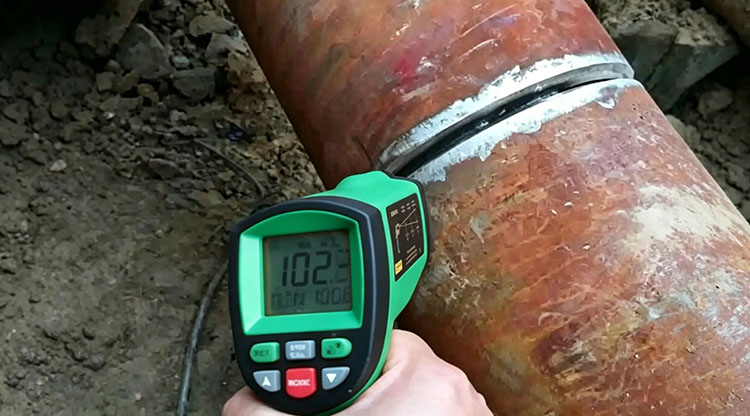
This is the most commonly used and direct method. Use a temperature measuring gun to directly measure the temperature of the previous layer of weld or weld bead to determine whether it reaches the specified interpass temperature.
Use thermometer pens of different colors to mark the weld, and judge the temperature of the weld according to the discoloration of the thermometer pen.
Use an infrared thermal imaging camera to monitor the temperature of the weld and understand the temperature distribution of the weld intuitively and conveniently.
Judge the interpass temperature based on experience by observing the color of the weld, listening to the welding sound, etc. This method has low accuracy and is generally only used in simple welding structures.
The interpass temperature is a process parameter that must be strictly controlled in multi-layer and multi-pass welding. The correct selection of interpass temperature can effectively ensure the quality and performance of welded joints and prevent the occurrence of welding defects. The selection of interpass temperature should comprehensively consider factors such as welding materials, welding methods, thickness of structural parts, ambient temperature and process requirements.
Post time: May-18-2026