
Many welding problems that show up on the shop floor—poor bead appearance, porosity, cracking—are often traced back to one overlooked factor: how the consumables were stored before they ever reached the welder’s hand.
For fabrication shops, construction sites, and manufacturing facilities, selecting the right electrode or wire is only half the battle. The other half is keeping it in good condition from the moment it arrives until the moment it’s used.
Why Consumable Storage Matters
Some operators assume that if an electrode or wire looks fine on the outside, it is fine to use. This assumption can be costly.
Moisture absorption, contamination, or packaging damage may not be visible to the naked eye, but they can significantly affect welding performance. Common consequences include:
Porosity and hydrogen-induced cracking—particularly with low-hydrogen electrodes
Poor arc stability—increased spatter, erratic puddle control, and uneven beads
Higher rework rates—costly delays and wasted material
Reduced confidence in critical joints—especially in pressure vessels, structural steel, and heavy equipment
Which Consumables Are Most Vulnerable?
Not all welding consumables react the same way to poor storage conditions. Some are more forgiving; others demand strict control.

Common Storage Mistakes in the Field
In many workshops, the issues are not about a complete lack of storage knowledge—they are about execution gaps.
Proper Storage Practices
1 Stable Storage Environment
Consumables should be kept in a clean, dry, well-ventilated area. Avoid temperature swings, direct sunlight, and any risk of water ingress. In humid seasons, pay special attention to dehumidification and floor insulation.
2 Keep Consumables Off the Floor
Never place electrodes, wires, or flux directly on the floor or against walls. Use pallets, racks, or shelves to allow air circulation and reduce moisture pickup.
3 Preserve Original Packaging
Unused consumables should remain in their original, unopened packaging. Once opened, use them promptly or reseal to minimize exposure. Track open dates and mark packages clearly.
4 Segregate by Type and Batch
Different grades, diameters, and lots must be stored separately to prevent mix-ups and misissue. Label clearly and follow first-in-first-out usage.
5 Follow Proper Drying and Holding Procedures
For moisture-sensitive consumables like low-hydrogen electrodes, follow the manufacturer’s recommended drying temperature and time. Drying is not “the hotter, the better.” Excessive temperature can damage the coating; insufficient temperature leaves moisture trapped.
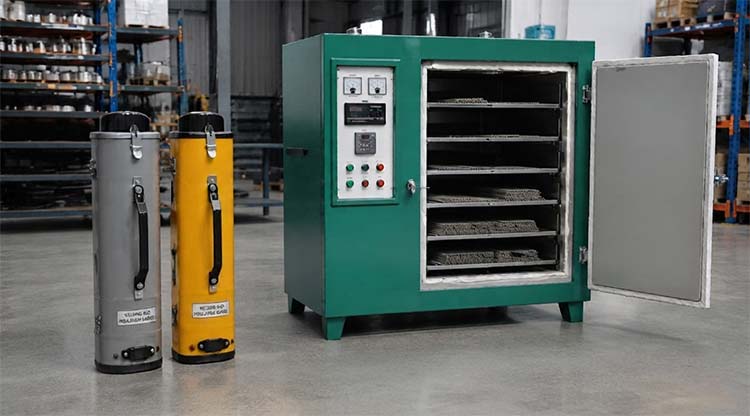
Control at the Point of Use
Making Storage Management Work
Most companies already have storage procedures on paper. The gap is often between policy and practice.
To build a reliable consumable management system, consider:
Establish clear procedures from receiving to issuing to returns
Provide basic training for storekeepers and welding personnel
Maintain good labeling, inventory tracking, and batch records
Set stricter controls for critical or sensitive consumables
Increase inspection frequency during wet or humid seasons
Post time: Jun-29-2026