
Choosing the correct welding electrode is essential for achieving strong, reliable, and high-quality welds. Different welding applications require different electrode types depending on the base metal, welding environment, mechanical requirements, and operating conditions.
Selecting the wrong welding electrode may result in welding defects such as cracks, porosity, insufficient strength, and poor weld appearance. This guide introduces the key rules for choosing suitable welding electrodes.
Choose Electrodes According to Base Metal
The first step in electrode selection is identifying the material being welded.
For carbon steel applications, the electrode should match the strength requirements of the base metal.
Common examples:
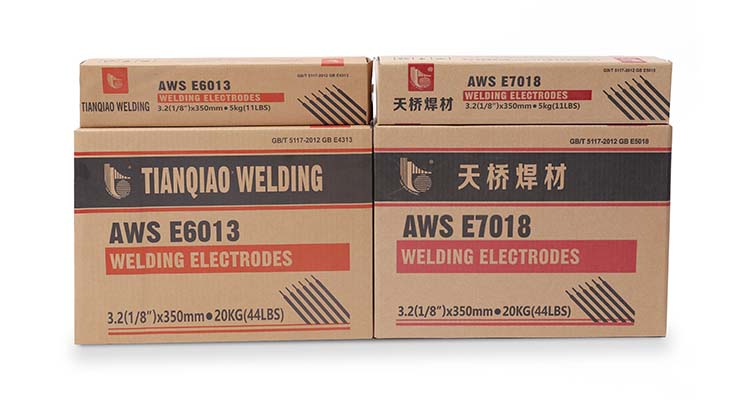
E6013 Welding Electrode
E6013 is a popular general-purpose electrode suitable for carbon steel structures, repair work, light fabrication, and maintenance welding. It provides stable arc performance, easy operation, and smooth weld appearance.
J422 Welding Electrode
J422 is widely used for welding Q235 carbon steel. It offers excellent welding performance, low spatter, and good adaptability for various welding conditions.
E7018 Welding Electrode
E7018 is a low hydrogen electrode designed for applications requiring higher strength and crack resistance, such as heavy machinery, steel structures, and important engineering projects.
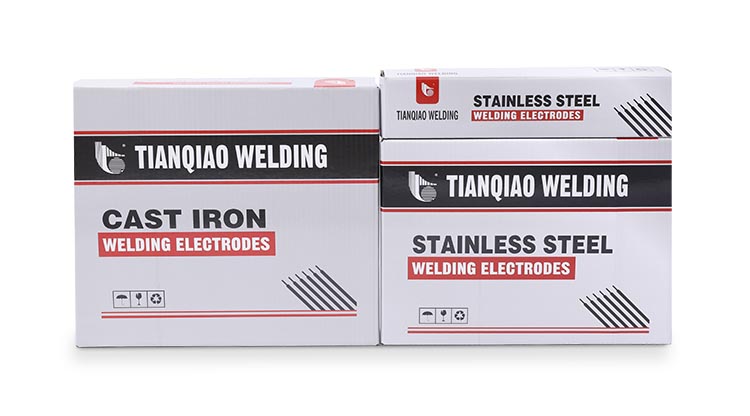
For stainless steel welding, the electrode should match the chemical composition and corrosion resistance requirements of the base material. For example, E308L is commonly used for 304 stainless steel, while E316L is suitable for applications requiring better corrosion resistance.
Select Electrodes Based on Welding Requirements
Different projects require different welding performance.
For general fabrication and daily repair work, electrodes such as E6013 and J422 are preferred because they are easy to use and provide good weld quality.
For heavy-duty structures, pressure equipment, bridges, and machinery manufacturing, low hydrogen electrodes such as E7018, J506, and J507 are recommended because they provide excellent mechanical properties and better crack resistance.
Consider the Welding Environment
The working environment also affects electrode selection.
For outdoor welding, electrodes with strong penetration and good arc stability are recommended. E6010 and E6011 electrodes are commonly used for field welding because they perform well under challenging conditions.
For high-temperature or corrosive environments, special alloy or stainless steel electrodes should be selected to ensure long service life and reliable performance.
Match Electrode Diameter with Material Thickness
Choosing the correct electrode diameter improves welding efficiency and prevents defects.
General recommendations:
| Material Thickness | Recommended Electrode Diameter |
|---|---|
| 1.5–3 mm material | Use 2.5 mm electrodes |
| 3–6 mm material | Use 3.2 mm electrodes |
| 6–12 mm material | Use 4.0 mm electrodes |
| Above 12 mm material | Use 5.0 mm electrodes |
Thin materials usually require smaller diameter electrodes to avoid burn-through, while thicker materials need larger electrodes for better welding efficiency.
Consider Welding Position and Power Source
Different welding positions require electrodes with suitable operating characteristics. For projects involving flat, vertical, horizontal, or overhead welding, all-position electrodes are often preferred.
The welding machine type should also be considered. Rutile electrodes such as E6013 and J422 provide stable performance with AC and DC power sources, while low hydrogen electrodes require proper storage and baking before use.
Post time: Aug-02-2026