
304 stainless steel (GB/T 06Cr19Ni10) is the most widely utilized type of chromium-nickel stainless steel. As a versatile material, it exhibits excellent corrosion resistance, heat resistance, low-temperature strength, and mechanical properties. It possesses good hot-working characteristics—such as suitability for stamping and bending—and does not undergo hardening through heat treatment (with an effective service temperature range of -196°C to 800°C). 304 stainless steel is resistant to corrosion in atmospheric environments and is well-suited for the processing, storage, and transportation of food products, offering excellent processability and weldability.
For welding 304 stainless steel, the A002 (E308L-16) welding electrode is recommended; its lower carbon content minimizes carbide precipitation during the welding process, thereby enhancing corrosion resistance.
Its deposited metal contains approximately 19% chromium and 10% nickel, with an extremely low carbon content (≤0.04%). This “L” (low-carbon) characteristic provides superior resistance to intergranular corrosion, making it particularly suitable for applications where post-weld heat treatment is not feasible. It exhibits good corrosion resistance in oxidizing media such as nitric acid, is generally suitable for service temperatures up to 300°C, and maintains good low-temperature toughness.
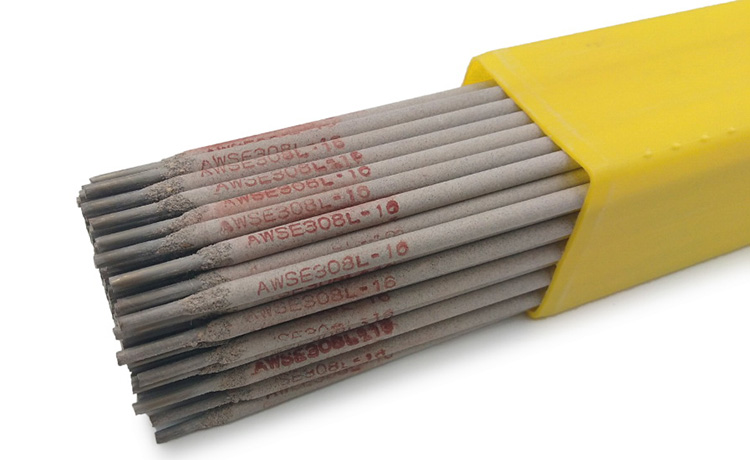
The electrode features a titania-type (rutile) coating and can be used with both AC and DC power sources. It offers a stable arc, low spatter, easy slag removal, and produces a smooth, aesthetically pleasing weld bead. Suitable for all-position welding (flat, horizontal, vertical, and overhead), it provides excellent operability and is user-friendly for welders.
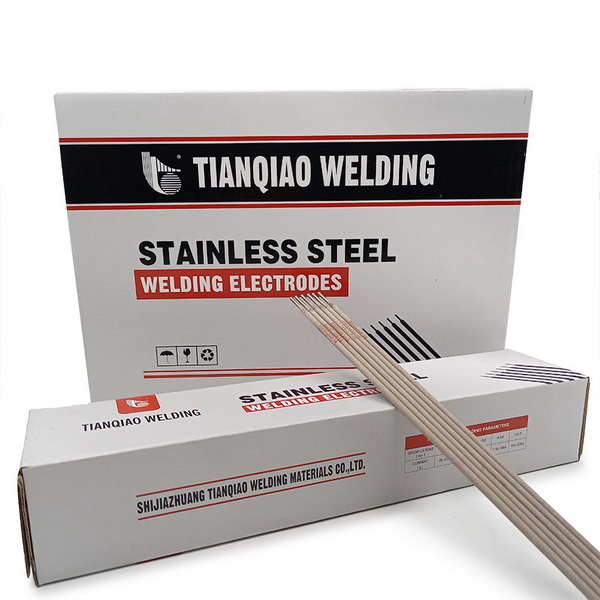
Designed specifically for welding low-carbon or titanium/niobium-stabilized austenitic stainless steels such as 304L and 304, it is widely used in applications with stringent requirements for intergranular corrosion resistance:
Post time: Mar-19-2026