
Welding defects can be divided into two main categories based on their location in the weld: internal defects and external defects.
External defects are located on the outer surface of the weld and are directly visible. External defects mainly include weld dimensions that do not meet requirements, undercut, weld spatter, collapse, surface porosity, surface cracks, and burn-through.
Internal defects mainly include incomplete penetration, internal porosity, internal cracks, and slag inclusions. Internal defects are located inside the weld and can only be detected using non-destructive testing methods or destructive testing.
1.Unqualified weld seam
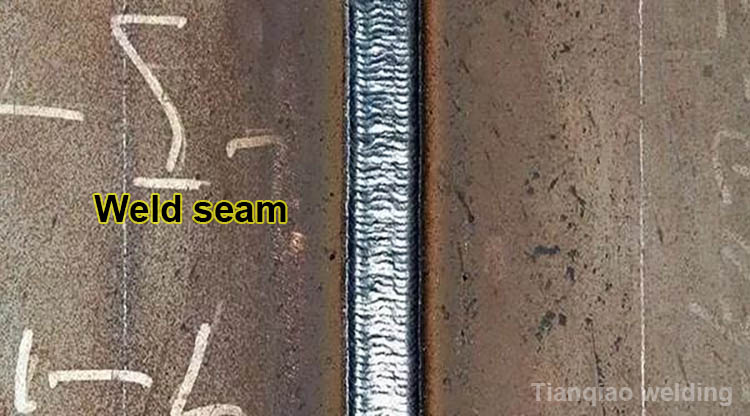
Weld dimensions do not meet the requirements. This mainly refers to uneven weld height and width, excessive or insufficient weld reinforcement, etc.
Undersized welds reduce the load-bearing capacity of the welded joint; oversized welds increase the welding workload, leading to increased welding residual stress and deformation, and causing stress concentration.
Improper welding groove angle, uneven assembly gap, excessive or insufficient welding current, improper welding technique or speed, and incorrect welding angle can all result in weld dimensions that do not meet the requirements.
2.Undercut
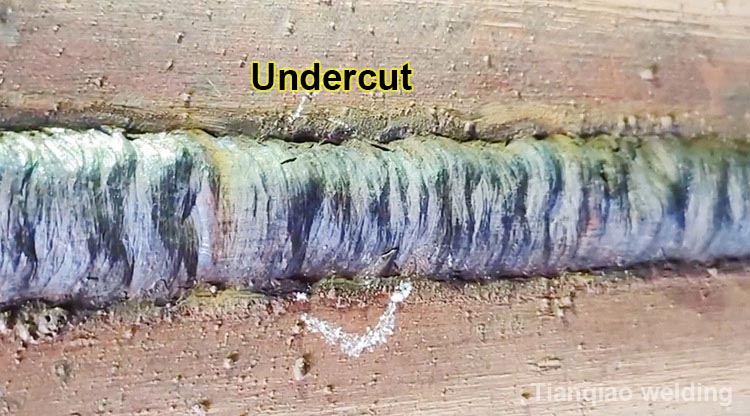
During welding, the groove formed at the junction of the weld seam and the base metal on both sides is called undercut. Undercut reduces the effective cross-section of the base metal, weakening the strength of the welded joint. It also creates stress concentrations at the undercut, which can lead to cracks and even structural failure under load.
Undercut is caused by improper welding techniques and incorrect welding parameters, such as excessive welding current, excessively long arc length, and improper electrode angle.
3.Weld beading
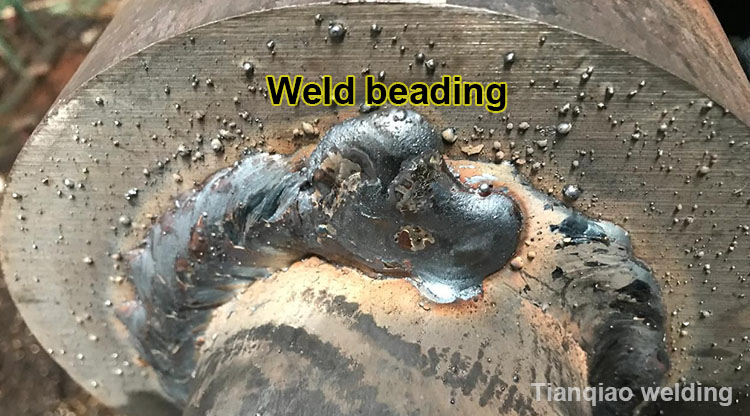
During welding, weld beading refers to the metal lumps formed when molten metal flows onto the unmelted base metal outside the weld seam. Weld beading not only affects the aesthetic appearance of the weld, but also often hides incomplete penetration defects underneath, leading to stress concentration. Excessive weld gap, incorrect electrode position and welding technique, excessive welding current, or excessively slow welding speed can all cause weld beading.
4.Burn-through
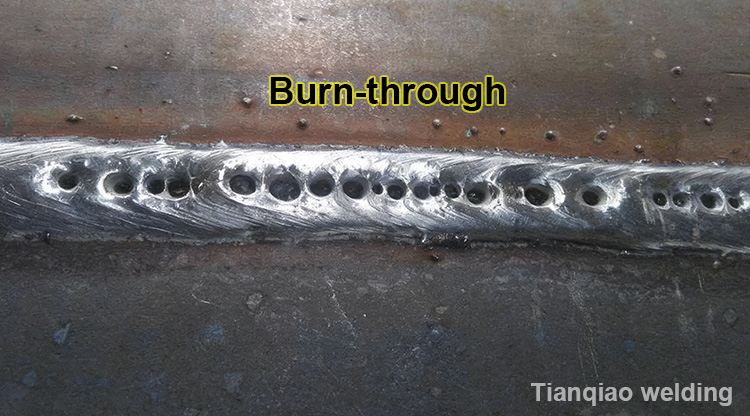
During welding, if molten metal flows out from the back of the groove, forming a through-hole defect, this is called burn-through.
The main causes of burn-through are excessive welding current and slow welding speed. Burn-through can also occur when the assembly gap is too large or the blunt edge is too thin.
5.Unfused
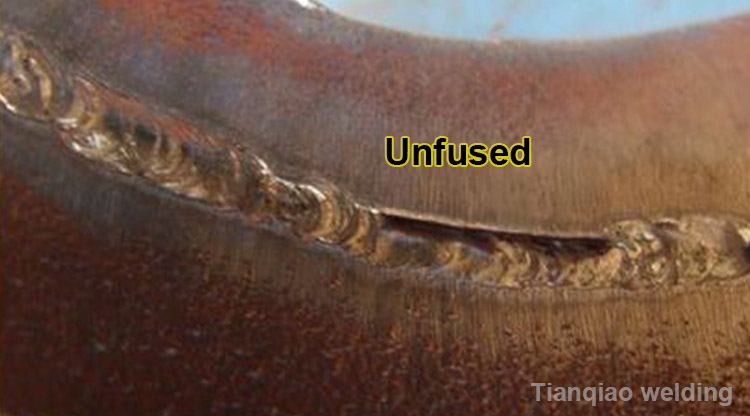
Lack of fusion refers to the incomplete melting and bonding between the weld bead and the base metal, or between adjacent weld beads, during welding; or, in spot welding, the incomplete melting and bonding between the base metals.
Causes of lack of fusion include: insufficient welding heat input; arc blow; rust and contaminants on the groove sidewalls; and incomplete slag removal between weld layers.
6.Pits, depressions, and unfilled areas
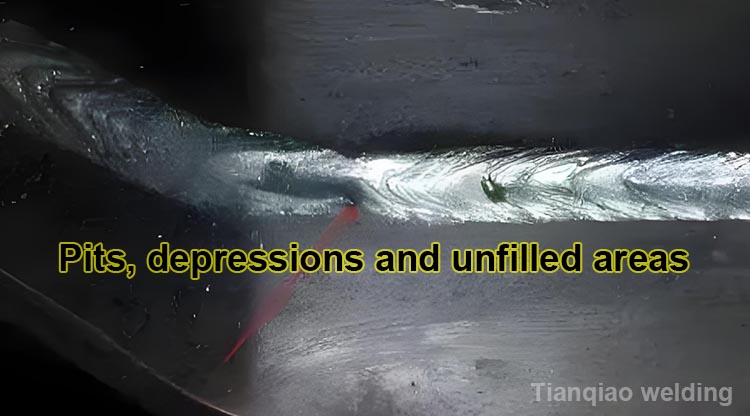
A pit refers to a localized depression on the surface or back of a weld that is lower than the surface of the base metal.
Collapse refers to the phenomenon in single-sided fusion welding where, due to improper welding techniques, excessive weld metal penetrates to the back of the weld, causing the front of the weld to collapse and the back to bulge. Insufficient filler metal can also result in continuous or discontinuous grooves on the weld surface; this phenomenon is called incomplete filling.
7.Slag inclusion
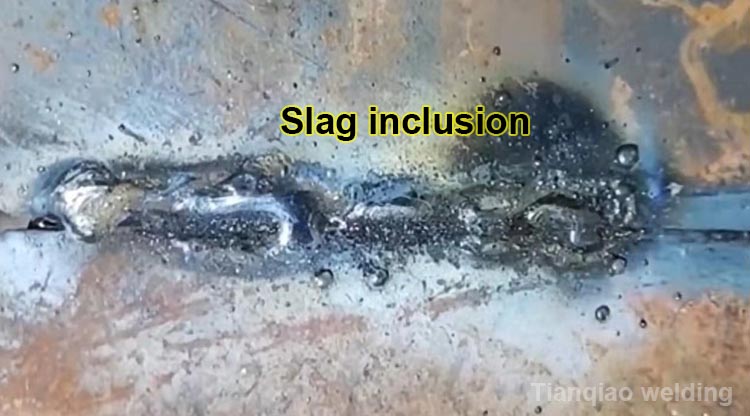
The slag remaining in the weld after welding is called slag inclusion.
There are many reasons for slag inclusion, such as incomplete cleaning of the edges of the workpiece and between weld layers and passes; insufficient welding current, which leads to a faster solidification rate of the molten metal, preventing the slag from floating to the surface; improper welding technique, resulting in incomplete separation of slag and molten metal, hindering the slag from rising; improper chemical composition of the workpiece and welding rod; and excessive oxygen and nitrogen content in the weld pool, etc.
8.Weld pores
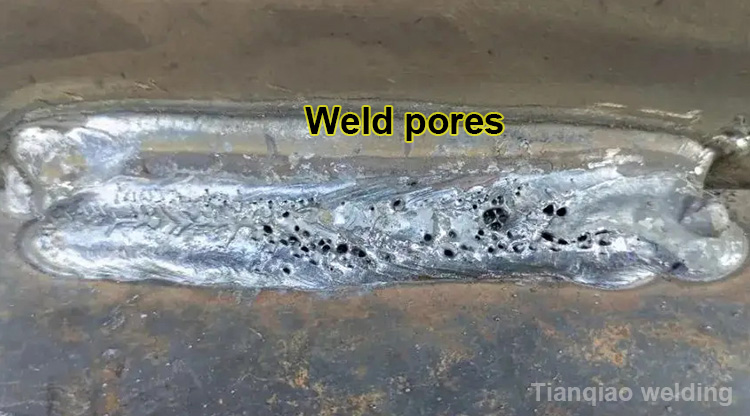
During welding, the cavities formed by the bubbles in the molten pool that fail to escape during solidification are called pores. Stomata can be divided into dense stomata, worm-like stomata and needle-like stomata. The gases that form pores in welds are mainly hydrogen, nitrogen and carbon monoxide.
Porosity has a great influence on the performance of the weld. It not only reduces the effective area of the weld and reduces the mechanical properties of the weld, but also destroys the density of the weld and easily causes leakage.
The causes of pores are: the good protection of the welding zone is damaged during the welding process; there are oil stains, rust and water-absorbing pollutants on the surface of the base metal welding zone and the welding wire; the welding rod is damp and insufficiently baked; the welding current is too large or too small, and the welding speed is too fast; the welding arc is too long and the arc voltage is high.
9.Crack
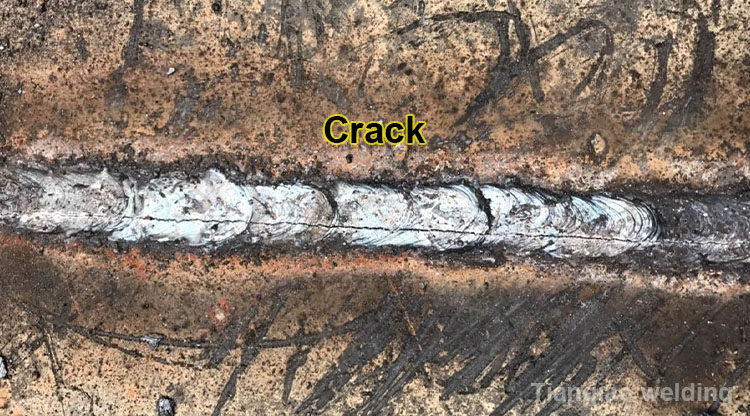
The temperatures at which welding cracks form can be classified into hot cracks and cold cracks. Based on the location of the cracks, they can be further classified into cracks in the weld metal and cracks in the heat-affected zone. Welding cracks that occur in the weld and heat-affected zone when the metal cools to a high-temperature region near the solidus line are called hot cracks; welding cracks that occur when the welded joint cools to a lower temperature are called cold cracks.
Welding cracks are the most dangerous welding defects, seriously affecting the performance and safety reliability of welded structures. Besides reducing the strength of the welded joint, cracks also cause severe stress concentration due to the sharp notch at the crack tip, promoting crack propagation and failure.
Welding quality is the key to project safety. Before welding, thoroughly clean the surface of the workpiece to remove oil and rust and ensure it is dry; use high-quality welding materials and store them properly to avoid moisture. During operation, the current and voltage are accurately controlled, process parameters are matched, and welding techniques are standardized to maintain stable arc operation. After welding, the appearance and internal quality of the weld are strictly inspected, and non-destructive testing technology is used to identify potential defects. If defects are found, repair immediately and formulate targeted measures. Through whole-process quality control, we can effectively reduce defects such as pores and cracks, ensure that the strength and sealing of welds meet standards, and ensure the long-term reliability of the structure.
Post time: Jan-27-2026