
How to Select Welding Materials for Dual-Grade Austenitic Stainless Steel
—In The Case of 304/304L and 316/316L
The key to selecting dual-grade stainless steel welding consumables lies in understanding their fundamental nature: they simultaneously fulfil the mechanical properties of standard grades (such as 304) and the corrosion resistance characteristics of low-carbon grades (such as 304L). Therefore, when choosing consumables, we primarily adhere to the principle of “opting for the higher specification rather than the lower one“, while fully considering the specific service environment.
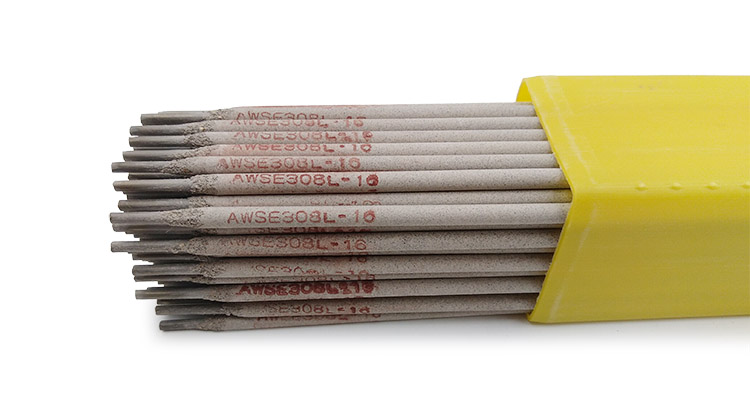
The following table provides common welding consumable selection options for 304/304L and 316/316L grades:
|
BASE MATERIAL (DUAL GRADE) |
BASE MATERIAL (DUAL GRADE): |
KEY ELEMENTS |
PRIMARY CONSIDERATION SCENARIOS |
| 304/304L |
Welding rod: E308L; Welding wire: ER308L |
base material’s corrosion resistance |
General operating conditions, with emphasis on resistance to intergranular corrosion |
| 316/316L |
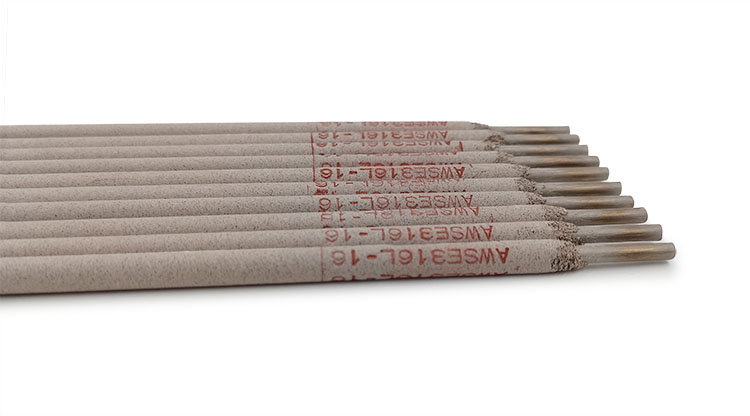
Welding rod: E316L; Welding wire: ER316L |
Contains molybdenum (Mo), matching the base material’s resistance to pitting corrosion |
More demanding corrosive environments, such as chemical processing and marine applications |
Core Principles for Material Selection
Having understood the recommendations in the table, you need to grasp these core principles behind them. They will help you tackle more complex situations:
• Chemical composition matching is fundamental: the key alloying elements (such as chromium, nickel, and molybdenum) in the selected filler material must correspond to those in the base metal. For instance, when welding 316/316L, the filler material must also contain molybdenum to ensure the weld possesses equivalent corrosion resistance.
• Combining mechanical properties: Dual-grade stainless steel inherently possesses both high strength and excellent corrosion resistance. The selected welding consumables must ensure that the strength of the weld metal is not inferior to that of the base material.
• Precise control of ferrite: A certain amount of ferrite (typically recommended within the range of 5%–10%) is required in austenitic stainless steel welds to prevent hot cracking. However, excessively high ferrite content may compromise the weld’s toughness and corrosion resistance. Therefore, selecting welding consumables capable of forming an appropriate ferrite content is of paramount importance.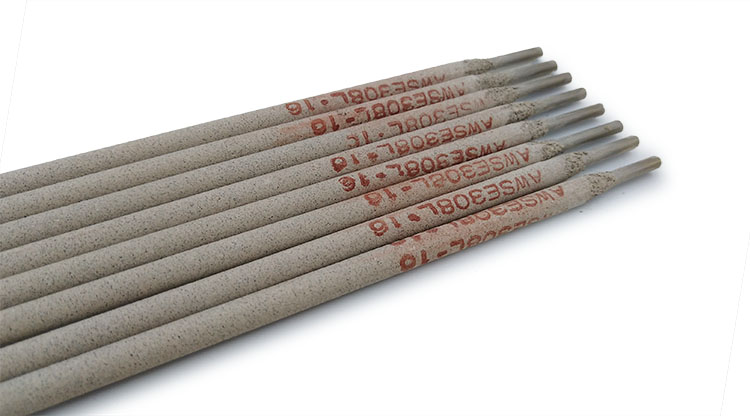
Specialised Welding Conditions and Dissimilar Material Welding
When encountering special circumstances, the selection of welding consumables requires flexible adjustment:
• Heterogeneous stainless steel welding: When welding 304/304L to 316/316L, or stainless steel to carbon steel, the 309/309L series of filler metals is typically recommended. Their higher chromium and nickel content better balances the alloy compositions of dissimilar base metals, diluting the weld pool and preventing the formation of brittle phases.
• Addressing demanding corrosive environments: In environments with elevated chloride ion concentrations prone to pitting corrosion, or where post-weld solution treatment is unfeasible, consideration should be given to employing higher-grade welding consumables. This may involve selecting materials with increased molybdenum content or nickel-based alloy welding consumables.
• Specific process requirements: For flux-cored welding wires, one may occasionally encounter grades bearing the suffix “Si” (e.g., E316L-Si). This denotes an elevated silicon content, which enhances the fluidity of the weld pool and improves weld bead formation.
Key points for welding practice
The correct selection of welding consumables must be complemented by proper welding practices:
• Strictly control heat input: Choose lower welding currents and reduced interpass temperatures to prevent overheating of the welded joint, thereby maximising the intergranular corrosion resistance inherent in low-carbon stainless steel welding consumables.
• Ensure protective efficacy: When employing argon arc welding or gas shielded welding, guarantee the purity of the inert gas (such as argon) and maintain an adequate flow rate of the shielding gas to prevent oxidation of the weld seam.
• Maintain cleanliness of the welding zone: Prior to welding, all contaminants such as oil, moisture, and other impurities must be removed from the surfaces of the base material and filler material to prevent the introduction of impurities that could cause weld defects.
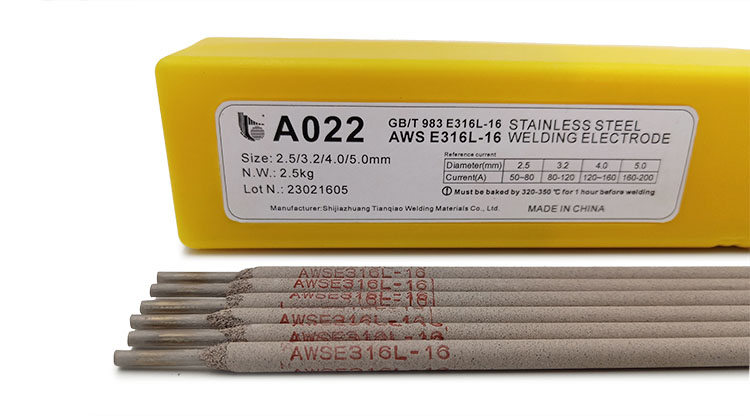
In general, when selecting welding consumables for dual-grade stainless steels such as 304/304L and 316/316L, the core principle is to match the base material’s chemical composition and properties while closely considering the specific service environment. Typically, low-carbon grades like 308L and 316L represent reliable choices. For dissimilar steel welding or specialised conditions, 309L or higher-grade consumables should be selected as appropriate.
Post time: Dec-23-2025